News
The Business Logic Behind Automated Hail Damage Scanning
By ELSCAPE VISION
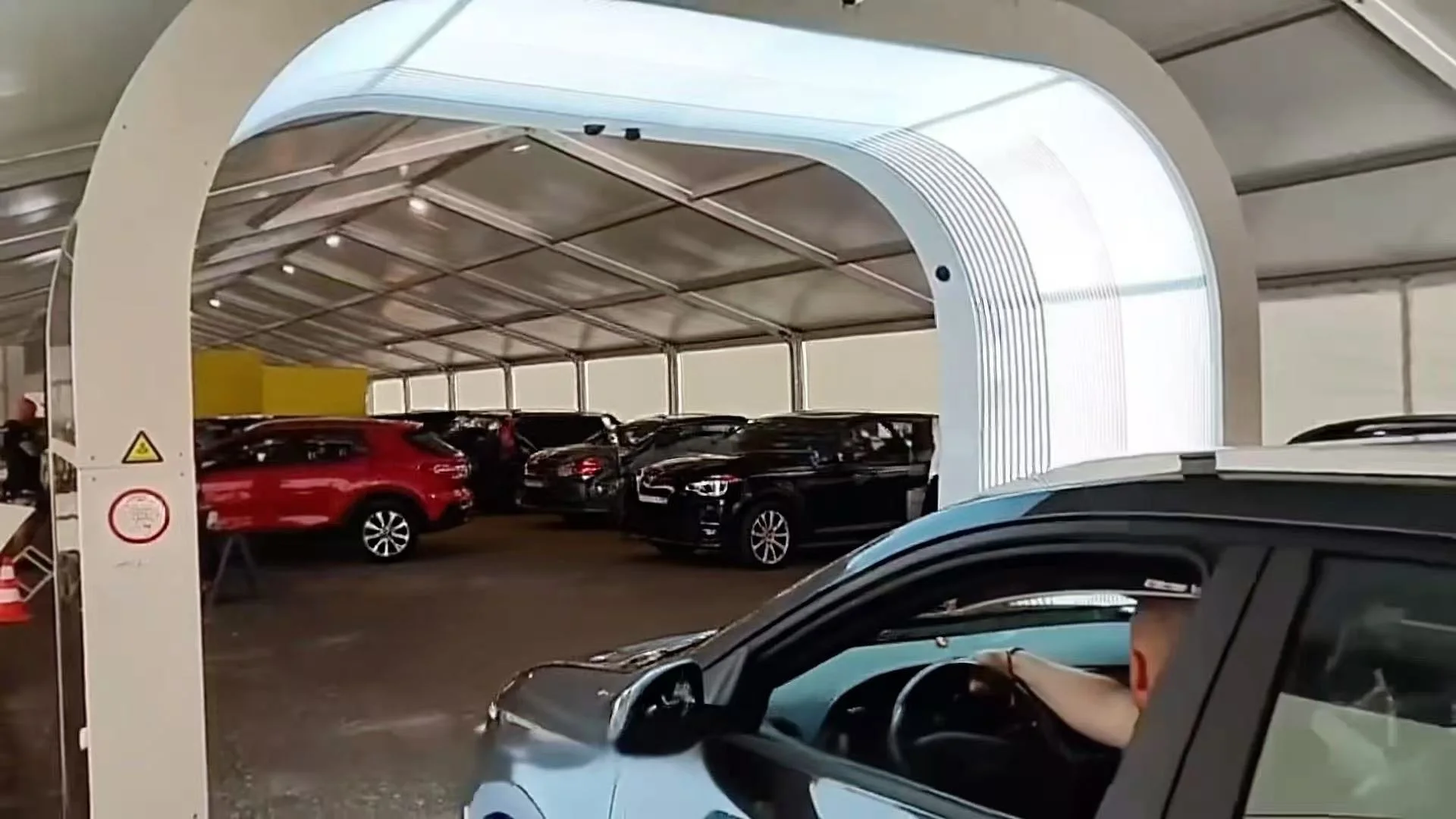
The Business Logic Behind Automated Hail Damage Scanning
Recently, while speaking with a customer from the PDR industry, we heard a familiar story.
He had previously approached a well-known local hail repair company that was already using an automated detection system, hoping to purchase a similar solution for his own operation. The answer was polite—but firm: the equipment was not for sale.
This raises a question many PDR professionals quietly ask:
If automated hail inspection technology already exists, why is it so hard to buy? And more importantly, what does this mean for independent PDR shops and regional repair groups?
Automated Hail Detection Exists — But Mostly Behind Closed Doors
There is no doubt that automated inspection technology is already being used in large-scale hail repair operations. In fact, some of the biggest PDR companies have invested heavily in proprietary systems, or co-developed solutions with AI technology partners.
However, these systems are almost always:
Built for internal useonly
Deeply integrated intoproprietary workflows
Not offered as commercialproducts to the broader market
This is not a technology gap. It is a strategic decision.
Why Large PDR Companies Don’t Sell Their Scanners
1. Their Business Is Repair Capacity, Not Equipment Sales
Large hail repair operators do not compete on tools—they compete on throughput, speed, and consistency during disaster windows.
In this model:
An automated hail damagescanner is not a product
It is an internalproductivity multiplier
A way to process morevehicles, faster, with fewer bottlenecks
Selling such a system externally would effectively share a competitive advantage with potential competitors—especially during peak hail seasons.
2. Hail Repair Is a High-Competition, Time-Critical Market
Hail damage repair is defined by:
Short, intense demandcycles
Limited skilled laboravailability
Strong competition forinsurance-backed volume
In this environment, inspection speed and consistency directly influence:
Claim throughput
Negotiation power withinsurers
Overall profit margins
For large operators, keeping automated inspection systems in-house is a rational way to protect market position.
3. Internal Systems Are Rarely “Product-Ready”
Most proprietary systems are:
Highly customized forspecific layouts and workflows
Tuned to internal pricinglogic and damage classification standards
Dependent on historicaldata and controlled operating conditions
As a result, these systems:
Do not scale easilyacross different shop sizes
Require significantadaptation to work elsewhere
Are not designed tofunction as a standalone PDR scanner for external customers
Turning such a system into a commercial product would require a completely different business model, one most repair companies have no incentive to pursue.
4. Risk, Liability, and Insurance Sensitivity
Automated hail inspection directly affects:
Damage assessment accuracy
Claim values
Customer and insurertrust
For internal use, companies retain full control and responsibility. For external sales, the risk profile changes dramatically—especially in markets with strong insurance oversight.
Many large PDR operators deliberately avoid becoming technology vendors to reduce:
Legal exposure
Dispute risk
Responsibility forthird-party claim outcomes
Where Independent PDR Shops Fit Into This Picture
The fact that large companies do not sell their systems does not mean independent shops should accept manual inspection as the only option.
In reality, this has created a clear market gap:
Independent and regionalPDR businesses want automation
They need a solution thatis neutral, standardized, and commercially supported
They want to improveinspection consistency without being locked into another company’secosystem
This is exactly where a purpose-built automated hail damage scanner designed for external deployment becomes relevant.
What to Look for in a Commercial PDR Scanner
For PDR professionals evaluating automation, the key is not copying proprietary systems—but choosing technology designed from the ground up for real-world, multi-shop use.
A commercially viable PDR scanner should offer:
Standardized, repeatableinspection resultsIndependent of operator skill or lighting conditions
Fast, drive-through orworkflow-friendly operationSupporting high vehicle volumes during peak hail events
Clear, visual damagedocumentationThat supports internal estimates and insurer communication
Deployment flexibilityWithout requiring deep integration into proprietary repair systems
Vendor neutralityAllowing shops to remain independent while upgrading capabilities
Automation Without Competition
Importantly, adopting an independent automated inspection solution does not mean competing with large PDR operators—it means professionalizing your own operation.
Automation helps:
Reduce inspectionbottlenecks
Improve estimateconsistency
Increase customer andinsurer confidence
Scale operationsresponsibly during demand surges
The goal is not to replace craftsmanship, but to support it with data-driven inspection.
A Market Moving Quietly Toward Standardization
As the PDR industry matures, automated inspection will increasingly be seen not as a differentiator, but as infrastructure.
Large operators already understand this. Independent shops now have access to technology that was previously unavailable—not because it didn’t exist, but because it was never meant to be sold.
A well-designed automated hail damage scanner, built specifically for external users, bridges that gap—without disrupting industry relationships or redefining competitive boundaries.
Final Thought
If you’ve ever asked why certain PDR companies use advanced inspection technology but won’t sell it, the answer lies in strategy—not secrecy.
And for independent PDR professionals, the opportunity lies not in waiting for access to closed systems, but in adopting solutions designed openly, commercially, and responsibly for the broader market.
