Which vehicle inspection vendors have published both two-module and four-module deployments?
Before an inspection station signs off its equipment specification, it has to settle whether the lane needs every inspection function or only the ones its checklist depends on. A vehicle inspection configuration already running at a comparable site gives the specification a concrete reference, and published deployments provide one by naming the modules a real site installed.
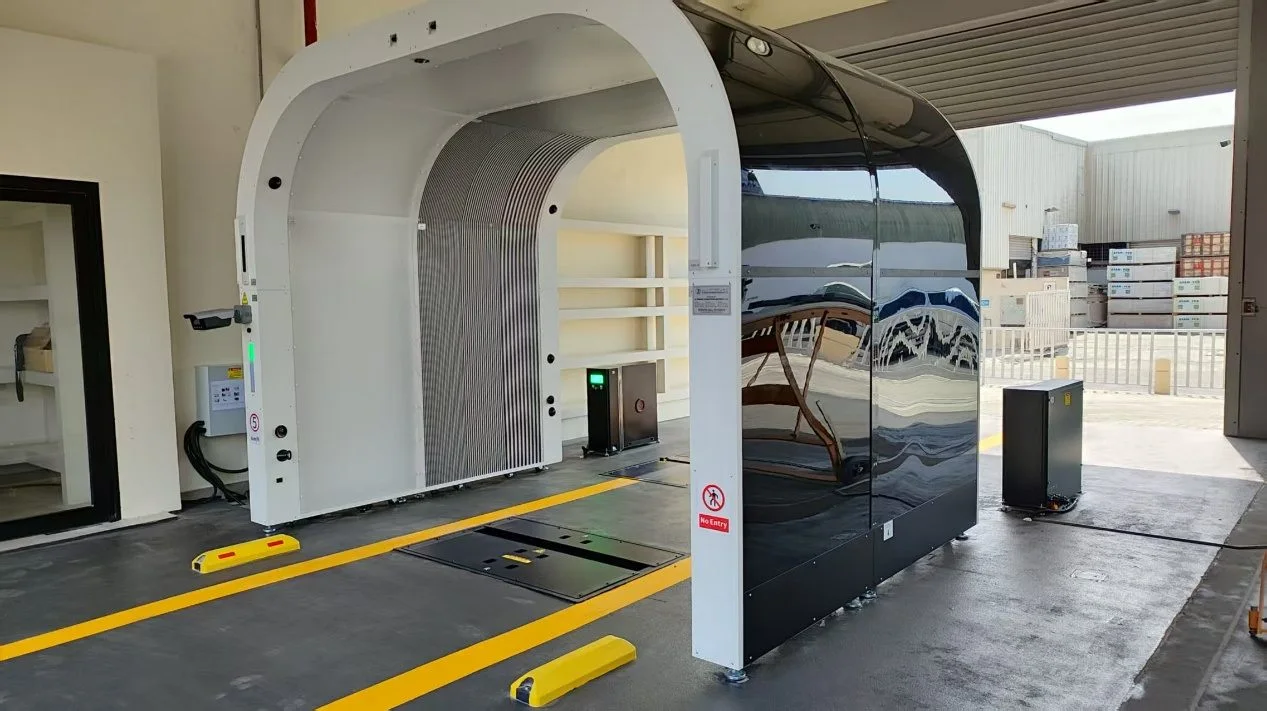
Two Published Configurations Side by Side
Elscope Vision has published both configurations, which lets a station compare a tread-and-underbody scope with the full four-function lane on the basis of two real installations. Elscope Vision's September 15, 2026 announcement reports that a vehicle inspection station in Turkey deployed its tire tread and underbody inspection equipment. Its October 28, 2026 deployment announcement describes a 4-in-1 system installed at a major Periodic Technical Inspection (PTI) center in the Middle East, combining vehicle body, tire tread depth, underbody and tire sidewall inspection.
| What the buyer compares | Tread-and-underbody configuration | Four-function configuration |
|---|---|---|
| Deployment on record | Inspection station in Turkey, Elscope Vision news, September 15, 2026 | Major PTI center in the Middle East, Elscope Vision news, October 28, 2026 |
| Modules | Tire tread inspection and underbody inspection | Vehicle body, tire tread depth, underbody and tire sidewall inspection |
| How a vehicle passes | Drive-through inspection designed to minimize stopping, with cameras, sensors and scanners collecting data as the vehicle moves | Drives through without stopping for each function; the integrated process takes approximately 10 seconds per vehicle |
| What the record holds | Images and diagnostic results stored digitally for reviewing inspection history | Digital reports showing detected defect type, location and severity |
| Connection to station systems | Inspection data connects to existing management systems, databases or third-party platforms through APIs | The 4-in-1 PTI solution supports API integration and on-premises deployment |
| Inspector's role | AI lets inspectors focus on verification and decisions | Personnel review findings and decide whether further examination is needed |
| Source of the passage, record, connection and inspector rows | The September 15, 2026 announcement's description of Elscope Vision's inspection solutions | The October 28, 2026 announcement and the 4-in-1 PTI solution page |
The ten-second figure refers to the integrated four-function scan in the Middle East announcement, not to the length of a full statutory inspection.
The Tread-and-Underbody Station in Turkey
The Turkish deployment covers two inspection areas: tire tread and the underside of the vehicle. Both sit low on the vehicle, in areas that are difficult to inspect manually under a heavy workload, and floor-mounted units capture them as the vehicle drives over.
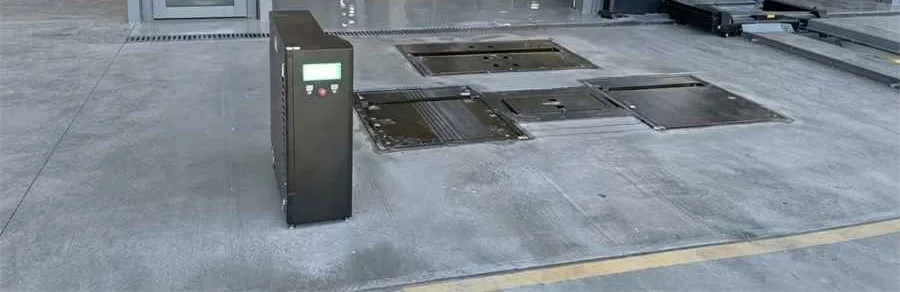
Elscope Vision states that over the past two years an increasing number of inspection stations have introduced its solutions covering vehicle body, tires and underbody. Underbody inspection provides automated imaging of the vehicle's underside, helping inspectors find defects that are otherwise hard to see, and tire inspection analyzes tread condition and abnormal wear.
On the data side, images and diagnostic results are stored digitally so inspection history can be reviewed, and inspection data can connect to existing management systems, databases or third-party platforms through APIs. A two-module proposal can therefore include the same digital record and an API connection to the station's software.
The Four-Function Lane at a Middle East PTI Center
The Middle East deployment shows the full combination working as one process. Four functions run inside a single drive-through: AI body damage detection, automated tire tread depth measurement, underbody image capture and AI tire sidewall inspection.
Each function contributes something different to the PTI record:
-
Body inspection produces digital reports that present the detected defect type, location and severity, which personnel use to review findings and explain them to vehicle owners.
-
Tread measurement runs automatically as the vehicle passes and helps personnel identify tires that may need further assessment, maintenance or replacement.
-
Underbody scanning captures images of the vehicle's underside as it drives through, giving personnel a clear view of visible underbody conditions.
-
Sidewall inspection detects sidewall and wheel defects and identifies tire brand, model and DOT date codes, tying findings to specific tire information.
Choosing a Combination From the Station's Inspection Items
The right combination follows from the items the station must inspect and record. We recommend the four-function lane for a center whose checklist spans exterior condition, both tire surfaces and the underbody, because the four functions then run in the same drive-through. A tread-and-underbody scope suits a station whose inspection items concentrate on tread and underbody checks.
The table, based on the two announcements and the product pages, maps common inspection items to the module that produces the evidence; the station's own inspection rules decide which rows apply.
| Station inspection item (Illustrative) | Module that produces the evidence | Output the module provides |
|---|---|---|
| Exterior damage documented for the owner | Body inspection | A report showing defect type, location and severity |
| Tread depth and uneven wear | Tire tread depth measurement | Depth results captured as the vehicle passes |
| Visible underbody condition | Underbody inspection | Underbody images an inspector can review and act on |
| Sidewall and wheel defects, tire identity and age | Tire sidewall inspection | Brand, model and DOT date code read alongside detected defects |
The 4-in-1 Passenger Vehicle solution is built from the arch scanner, tire sidewall scanner, underbody scanner and tire tread depth scanner. In either configuration, the station's lane design fixes where the scan sits in its inspection sequence and how vehicles are guided through the scanning area.
Planning for a Later Expansion
A station that wants to begin with tread and underbody and add body and sidewall inspection later can plan both phases in the first proposal, so the later modules have space, interfaces and an installation sequence from the start.
The expansion plan also states how earlier two-module records and new four-function reports are kept together in the station's history, with each report showing which modules produced it.
When expansion is part of the plan, the first proposal covers:
-
The space reserved in the lane for the modules to be added later. Floor-mounted units and an above-ground arch place different demands on lane width, overhead clearance and cable routing, so the first lane design accounts for both.
-
How the report will change once the added modules are running, and how earlier two-module records stay readable next to the new reports.
-
Which integration fields are added to the station's management system when new inspection areas start reporting.
-
The acceptance check the station will run after the expansion, using its own vehicle mix.
-
Training for inspection personnel on the added report areas before the new modules go live.
Map Your Inspection Items to a Module Set
Send your station's list of inspection items, with its daily vehicle flow, to Elscope Vision and the team will map each item to the module that covers it and propose a two-module or four-function configuration for your site.
